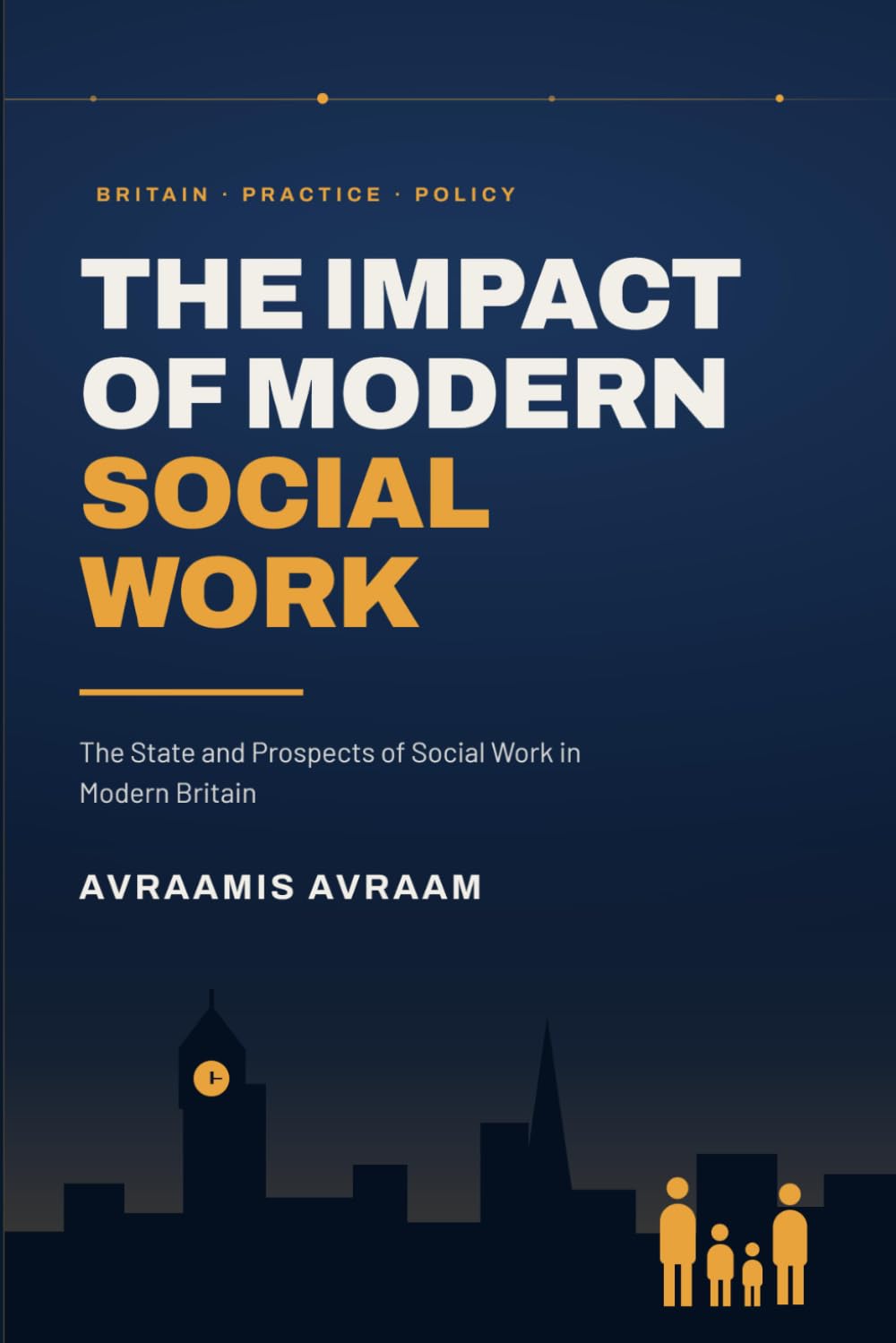
The Impact of Modern Social Work: The State and Prospects of Social Work in Modern Britain
The Impact of Modern Social Work: The State and Prospects of Social Work in Modern Britain, by Avraamis Avraam, a social worker and safeguarding children expert with 38 years' frontline and leadership experience in UK local and central government."
From the trenches of child protection to safeguarding leadership, my work is grounded in practice, tested in policy, and expressed through rigorous, accessible scholarship. The 31-chapter paperback, The Impact of Modern Social Work: The State and Prospects of Social Work in Modern Britain, asks hard questions about child protection and thresholds and considers how digital childhood, AI, and data shape risks and responses. It is written for social workers, safeguarding professionals, managers, students, educators, and policymakers who seek clarity, accountability, and practical guidance in a rapidly evolving landscape. The aim is simple yet ambitious: to illuminate what works, why it works or fails, and how we can stretch scarce resources to protect the most vulnerable. The primary action I invite readers to take is to explore and acquire The Impact of Modern Social Work, available on Amazon, so the conversations it sparks can travel beyond pages and into real-world impact. You will also encounter a dark section titled 'Behind every statistic is a child' with the exact line: Workforce turnover becomes the child having to tell their story again.
Practice in Dialogue: Modern Social Work
Written by Avraamis Avraam, a social worker by training and by vocation, with 38 years in frontline practice and leadership within UK local and central government.
His career began in the trenches of child protection, where poverty, domestic abuse, mental health, and neurodiversity shaped daily decisions. It progressed from frontline practice to safeguarding leadership and senior management, shaping policy, standards, and the day-to-day safety nets for children and families.
The Impact of Modern Social Work gathers these experiences with scholarly analysis to examine what works, why it works or fails, and how we can stretch scarce resources to protect the most vulnerable. The work is grounded in safeguarding as a human rights obligation and in rigorous, evidence-based practice, with candour about limits and a firm commitment to accessibility. It speaks to social workers, safeguarding professionals, managers, students, educators, and policymakers who seek clarity and practical guidance in a rapidly evolving landscape.
The primary action I invite readers to take is to explore The Impact of Modern Social Work: The State and Prospects of Social Work in Modern Britain, available now on Amazon, so that the conversations it sparks can travel beyond pages and into real-world impact.
Behind every statistic is a child Workforce turnover becomes the child having to tell their story again.
What happens when society asks social work to do more, while the time, resources and services available to practitioners remain under increasing pressure?
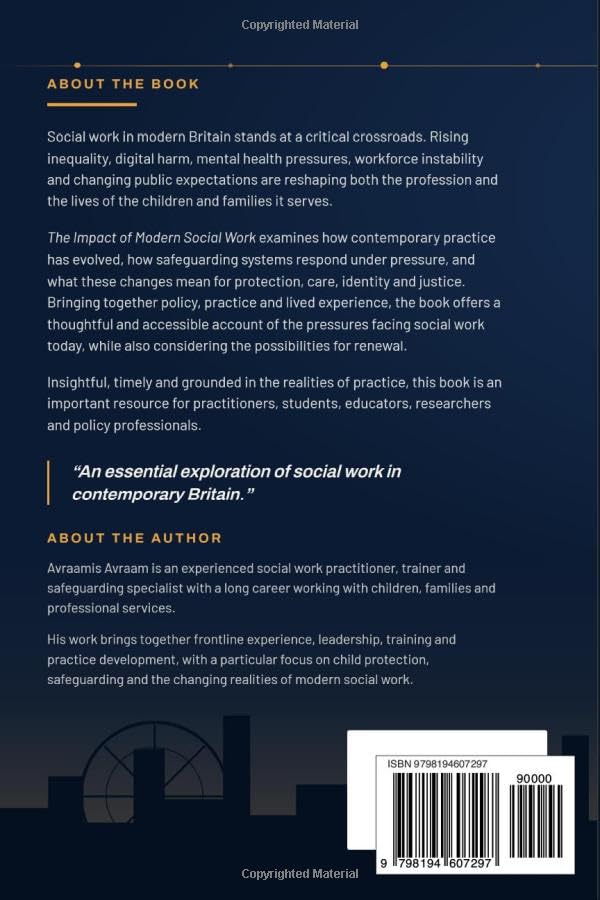
The Impact of Modern Social Work: The State and Prospects of Social Work in Modern Britain provides a wide-ranging, evidence-informed examination of contemporary social work, child protection and the changing lives of children and families across Britain. Drawing on policy, legislation, research and decades of practice experience, Avraamis Avraam explores a profession operating at the intersection of family life, law, poverty, inequality, politics, technology and human relationships.
At its heart is a recurring tension: the boundaries of safeguarding continue to expand, while social workers are increasingly required to manage complexity within systems affected by workforce instability, service scarcity, thresholds, bureaucracy and fragmented provision. The book moves beyond descriptions of social work practice to ask difficult questions about how effectively modern systems actually protect and support children. Do child protection plans necessarily make children safer? Are thresholds increasingly being used to ration scarce help?
Can meaningful partnership with parents coexist with statutory authority? What happens when the services identified through assessment simply do not exist?
Across 31 chapters, the book examines major issues shaping social work today, including:
• child protection, statutory intervention and the effectiveness of protection planning
• domestic abuse, coercive control and the family justice system
• thresholds, unmet need, prevention and early help
• poverty, inequality and the cost-of-living crisis
• digital childhood, online exploitation, AI and algorithmic decision-making
• children’s mental health, neurodiversity and disability
• political polarisation, migration, extremism and the changing safeguarding landscape
• culture, diversity, discrimination and intersectional disadvantage
• children’s and parents’ participation, voice and power
• parental mental ill-health, substance misuse, offending and hidden harm
• children in care, adoption, permanence and the transition to adulthood
• unaccompanied asylum-seeking children, trafficking and modern slavery
• youth justice, criminal exploitation, adultification and the criminalisation of childhood
• workforce wellbeing, professional identity, marketisation and managerialism
• differences between social-work systems across the four nations of the United Kingdom
• what meaningful renewal of social work might require.
Throughout, organisational statistics and policy debates are brought back to their human consequences. Workforce turnover becomes the child having to tell their story again. Placement scarcity becomes separation from school, siblings and community.
A threshold decision becomes the difference between receiving help now and waiting for circumstances to deteriorate further. The book does not offer simplistic solutions or romanticise the profession. Instead, it provides a critical but constructive examination of what is working, what is not, and what needs to change if social work is to remain relational, evidence-informed, humane and capable of responding to the realities of modern childhood.
A substantial resource for social workers, safeguarding professionals, managers, students, educators, researchers, policymakers and anyone seeking to understand the changing role and future of social work in modern Britain.